Presentation to educate the people of Hawaii and others about the 100 year old utility monopoly that has a stranglehold on Hawaii's energy future, operates with full impunity or carte blanch, and rules this state like an outlaw gang in an old west town of the 1880's.
Showing posts with label Neighbor Islands. Show all posts
Showing posts with label Neighbor Islands. Show all posts
Thursday, June 7, 2012
Hawaiian Electric Industries Deregulation Issues
Presentation to educate the people of Hawaii and others about the 100 year old utility monopoly that has a stranglehold on Hawaii's energy future, operates with full impunity or carte blanch, and rules this state like an outlaw gang in an old west town of the 1880's.

Tuesday, June 5, 2012
Harry Kim to File for Mayor
By Dave Smith - June 4, 2012
Source: Big Island Now
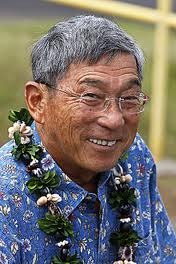
Former two-term mayor Harry Kim today took out nomination papers to run for the chief executive position on the Big Island.
Kim told Big Island Now this afternoon that he will definitely file to run for mayor tomorrow, which is the election deadline for the Aug. 11 primary election.
Kim’s candidacy adds a significant twist to the mayor’s race where he will become the 10th candidate, according to Friday’s report from the state elections office.
Those with the highest profiles, incumbent Mayor Billy Kenoi and County Council Chairman Dominic Yagong, could not be immediately reached for comment.
Kim, 72, served as mayor from 2000-2008 after a 24-year stint as director of the county’s Civil Defense Agency. He was prevented by term limits from running for re-election immediately after that.
Kim knows his chief opponents well.
Yagong ran against him for mayor in the 2004 nonpartisan primary where he received 26% of the vote to Kim’s 62%. Kim has known Kenoi for many years and coached him as a player on the Waiakea High School football team. Kenoi also served as an executive assistant in the last six years of Kim’s administration.
Kim said he didn’t have qualms with either candidate who he said have a “different style of management” from him. Kim had endorsed Kenoi’s bid for mayor in 2008.
Kim said today that his return to politics was largely driven by actions that occurred during the past session at the state Legislature dealing with geothermal development.
He said he was disheartened by the easing of restrictions for those activities including the removal of the requirement for subzones for geothermal development.
But what prompted him into direct action, Kim said, was a request from DLNR Director William Aila Jr. to the state Environmental Council. Aila had asked the panel to exempt exploratory geothermal drilling from the state law that mandates the preparation of an environmental assessment or the more rigorous environmental impact statement.
Kim said he was dumbfounded when a committee of the council voted almost unanimously to recommend approval of Aila’s request.
“I couldn’t believe (the committee) did this,” Kim said. “I said, nah, they wouldn’t do that.”
After being urged to intervene by Gary Hooser, head of the state Office of Environmental Qualify Control, Kim spent four days researching the matter and preparing testimony.
After Kim appeared in person before the full Environmental Council in Honolulu, its members reversed the committee’s recommendation and voted to deny the change Aila had requested.
After that, “I really started thinking about geothermal, safety and health in government,” he said. “How could they do this?”
Kim said he also wondered how, if the exemption stood, government could justify requiring environmental studies for other types of projects.
Kim said his jaw dropped when he heard Aila say drilling for geothermal is comparable to drilling for water.
“I realize that some people truly think that geothermal is harmless,” he said. “I would think people in authority should do some research.”
Kim said he decided to re-enter politics to make sure geothermal and other development “is done right.”
“I realized that it’s not just about geothermal, it’s about faith in government,” he said.
Kim said another subject he is concerned about is solid waste. He said he has never been a proponent of landfills anywhere in Hawaii, and believes the solution is a plant like Oahu’s H-Power where garbage is burned to generate electricity.
He acknowledged that the waste-to-energy facility considered during his second term carried a steep price tag of $125 million, but feels that it’s the government’s duty to find a way to do it affordably.
He said he was also opposed to the County Charter amendment that set aside 2% of county revenues to purchase land to be preserved as open space, partly because it didn’t include funding for maintenance of those lands.
“That’s not a good way to spend public money,” he said, adding that such funding should be found elsewhere.
In the area of public funding, Kim will likely be subjected to questions about his administration’s practice of increasing the size of government during flush times, when soaring property values inflated county coffers.
During Kim’s eight years in office, the county’s operating budget more than doubled to more than $400 million. That included a tax increase of nearly 25% for homeowners sought by Kim and approved by the council for the 2002-03 fiscal year.
Kim said today he will run a campaign similar to his other two, in which he describes himself as an “applicant” for the mayor’s job.
While he has relatively little time for fundraising, that also includes continuing his policy of not taking any campaign donations greater than $10. Kim said no amount of advertising he could purchase would overshadow public perception of his years of public service.
“I worked for the people here for more than 40 years, and by now they should know me and my methods,” he said.
Kim acknowledged that his health could be an issue in the campaign, as he suffered two heart attacks in his final year in office.
“My health at this point is good,” he said, while acknowledging that he is currently undergoing additional cardiac testing.
He also admitted that because of the health issues his family did not want him to run, but supports his decision to do so.
Source: Big Island Now
Former two-term mayor Harry Kim today took out nomination papers to run for the chief executive position on the Big Island.
Kim told Big Island Now this afternoon that he will definitely file to run for mayor tomorrow, which is the election deadline for the Aug. 11 primary election.
Kim’s candidacy adds a significant twist to the mayor’s race where he will become the 10th candidate, according to Friday’s report from the state elections office.
Those with the highest profiles, incumbent Mayor Billy Kenoi and County Council Chairman Dominic Yagong, could not be immediately reached for comment.
Kim, 72, served as mayor from 2000-2008 after a 24-year stint as director of the county’s Civil Defense Agency. He was prevented by term limits from running for re-election immediately after that.
Kim knows his chief opponents well.
Yagong ran against him for mayor in the 2004 nonpartisan primary where he received 26% of the vote to Kim’s 62%. Kim has known Kenoi for many years and coached him as a player on the Waiakea High School football team. Kenoi also served as an executive assistant in the last six years of Kim’s administration.
Kim said he didn’t have qualms with either candidate who he said have a “different style of management” from him. Kim had endorsed Kenoi’s bid for mayor in 2008.
Kim said today that his return to politics was largely driven by actions that occurred during the past session at the state Legislature dealing with geothermal development.
He said he was disheartened by the easing of restrictions for those activities including the removal of the requirement for subzones for geothermal development.
But what prompted him into direct action, Kim said, was a request from DLNR Director William Aila Jr. to the state Environmental Council. Aila had asked the panel to exempt exploratory geothermal drilling from the state law that mandates the preparation of an environmental assessment or the more rigorous environmental impact statement.
Kim said he was dumbfounded when a committee of the council voted almost unanimously to recommend approval of Aila’s request.
“I couldn’t believe (the committee) did this,” Kim said. “I said, nah, they wouldn’t do that.”
After being urged to intervene by Gary Hooser, head of the state Office of Environmental Qualify Control, Kim spent four days researching the matter and preparing testimony.
After Kim appeared in person before the full Environmental Council in Honolulu, its members reversed the committee’s recommendation and voted to deny the change Aila had requested.
After that, “I really started thinking about geothermal, safety and health in government,” he said. “How could they do this?”
Kim said he also wondered how, if the exemption stood, government could justify requiring environmental studies for other types of projects.
Kim said his jaw dropped when he heard Aila say drilling for geothermal is comparable to drilling for water.
“I realize that some people truly think that geothermal is harmless,” he said. “I would think people in authority should do some research.”
Kim said he decided to re-enter politics to make sure geothermal and other development “is done right.”
“I realized that it’s not just about geothermal, it’s about faith in government,” he said.
Kim said another subject he is concerned about is solid waste. He said he has never been a proponent of landfills anywhere in Hawaii, and believes the solution is a plant like Oahu’s H-Power where garbage is burned to generate electricity.
He acknowledged that the waste-to-energy facility considered during his second term carried a steep price tag of $125 million, but feels that it’s the government’s duty to find a way to do it affordably.
He said he was also opposed to the County Charter amendment that set aside 2% of county revenues to purchase land to be preserved as open space, partly because it didn’t include funding for maintenance of those lands.
“That’s not a good way to spend public money,” he said, adding that such funding should be found elsewhere.
In the area of public funding, Kim will likely be subjected to questions about his administration’s practice of increasing the size of government during flush times, when soaring property values inflated county coffers.
During Kim’s eight years in office, the county’s operating budget more than doubled to more than $400 million. That included a tax increase of nearly 25% for homeowners sought by Kim and approved by the council for the 2002-03 fiscal year.
Kim said today he will run a campaign similar to his other two, in which he describes himself as an “applicant” for the mayor’s job.
While he has relatively little time for fundraising, that also includes continuing his policy of not taking any campaign donations greater than $10. Kim said no amount of advertising he could purchase would overshadow public perception of his years of public service.
“I worked for the people here for more than 40 years, and by now they should know me and my methods,” he said.
Kim acknowledged that his health could be an issue in the campaign, as he suffered two heart attacks in his final year in office.
“My health at this point is good,” he said, while acknowledging that he is currently undergoing additional cardiac testing.
He also admitted that because of the health issues his family did not want him to run, but supports his decision to do so.
Oahu-Centric Energy Plans Disregard Neighbor Islands
By Cynthia Oi
We are one state, the governor says, which is true, but out of true.
We are one state made up of islands connected under a government, but separated by vast stretches of ocean. That separation throws the truth of oneness off kilter, since it engenders divergent ways of living and somewhat conflicting aspirations and goals.
We are one state, but what Honolulu wants, what residents, business concerns, interest groups and political leaders on Oahu desire, isn’t quite what residents, businesses, interest groups and communities on Kauai, Lanai, Maui, Molokai or Hawaii island want.
Not all is different. Local residents — newbies and kamaainas, rural and urban — seek a good place to live, a clean environment, enough money and decent employment to make ends meet, and energy at reasonable cost.
Few will get the last, unless they become individually energy self-sufficient for the long term and remain disconnected to the power and power-production grid.
The governor, state Legislature, power producers and their allies have initiated a plan for a statewide energy system, establishing a regulatory framework for an undersea electricity transmission cable.
The measure is the starting point for hitching Oahu with its huge and growing appetite for electricity to what’s often referred to belittlingly as the outer or outlying islands, where renewable energy plants will have more space to breed.
The notion is the connectivity will benefit the neighbor islands, providing jobs, industry and more revenue ostensibly in local control. Oahu, crowded and getting more land poor with each suburban development given government blessing, will get to use the wind-, sun- and volcano-generated electricity.
The link will bring energy-cost equality, cable advocates say. All across Hawaii, electricity customers will pay one rate. It probably won’t be cheaper because the companies that control the grid will get to pass along the cost of the cable, now guesstimated at $1 billion, and renewable energy infrastructure and production will be expensive. Oneness in a sprawling power grid may not be a wise move anyway, subject to disasters natural and human-precipitated.
Hawaii’s goal to move away from fossil-fueled power is necessary. No one would argue with that. But the idea that the cable is essential to that intent, as the governor says, is premature in this early stage of renewable energy development.
Each island’s needs, potentials and conservation efforts should be assessed first, followed by a look at what resources can be reasonably tapped with least disruption to land, ocean, air and people. What will be acceptable should be evaluated based on the island’s community, not on what another needful, bustling region craves. Energy production and transmission that disturb and damage the character and atmosphere of an island is not sustainable.
Cable advocates argue that because Oahu, with the biggest revenue streams, subsidizes their highways, parks, social services and schools, the neighbor islands should be willing to shoulder the energy production burden.
It is an argument that goes against the theme of oneness. It reinforces neighbor islanders’ perception that the ocean that buffers them from the afflictions of brawny, overbearing Oahu should not be bridged.
Subscribe to:
Posts (Atom)